A Riveting Production Elevates ‘The Moderate’ Beyond Its Unresolved Questions
Ken Urban’s latest play, now at Central Square Theater

Every day, content moderators sift through the internet’s worst material, deciding what stays online and what disappears. Ken Urban’s The Moderate, now receiving its world premiere in a Catalyst Collaborative@MIT Production at Central Square Theater, is set in that world of content moderation, where workers review and categorize a constant stream of flagged material for a major social media platform. The job is repetitive and isolating, a constant stream of images and videos — some explicit, some banal — each requiring a split-second decision about what stays online and what is removed.
At its center is Frank (Nael Nacer, brilliant), whose wife (Celeste Oliva) has left and taken their son, leaving him alone and unemployed at the height of the pandemic. He accepts a $15-an-hour job as a content moderator, and it begins to erode his mental health almost immediately, even as it presses — in ways he doesn’t yet understand — against some unresolved trauma in his own life.
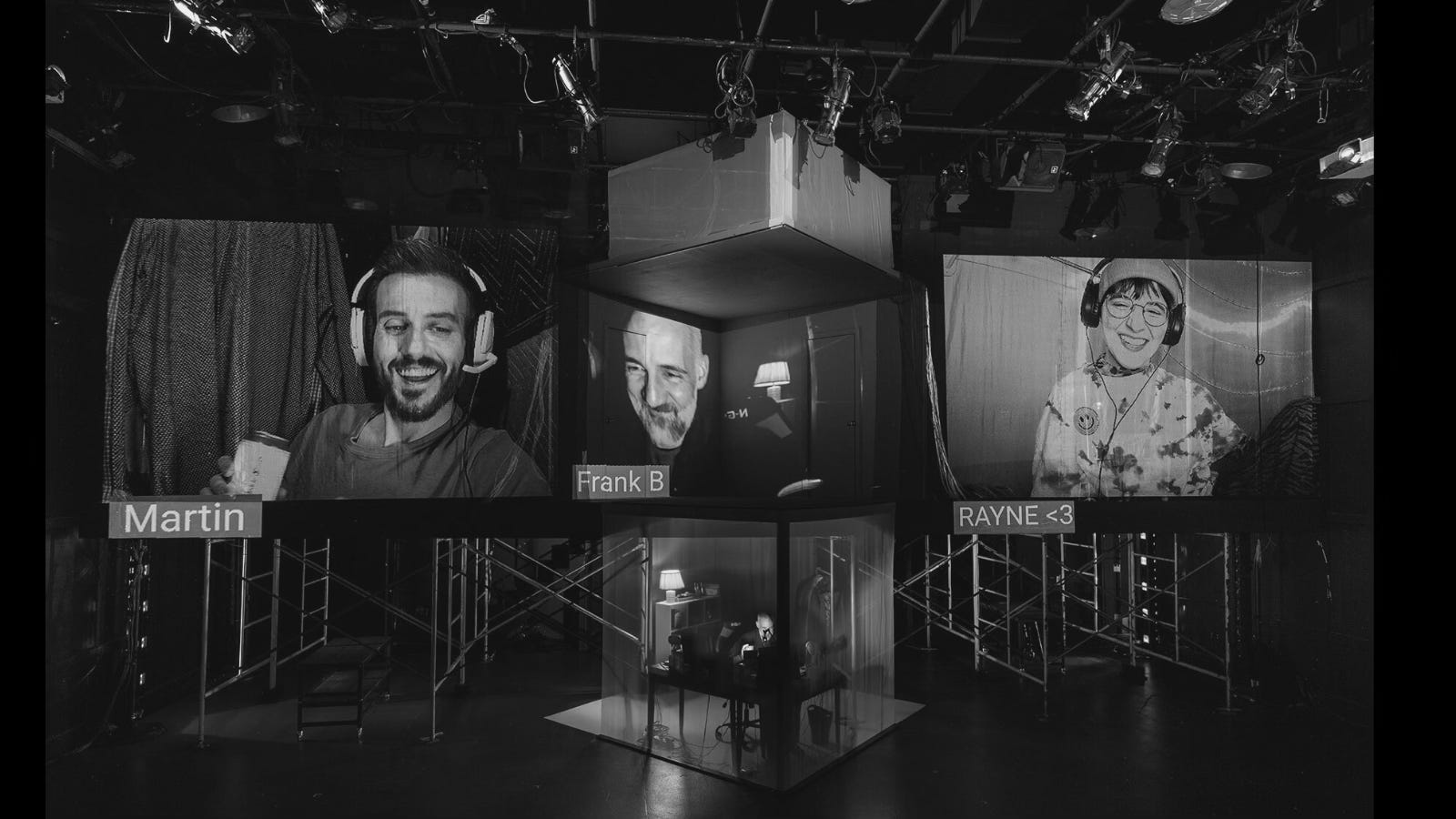
The job, done from home, comes with its own survival strategies, ones he encounters through two colleagues: his supervisor, Martin (Greg Maraio) and Rayne (Jules Talbot), a more seasoned moderator who has been doing this long enough to have figured out how to live with it. As Frank settles into the work, he becomes increasingly preoccupied with the material in front of him, particularly a series of videos involving a teenage boy (an excellent Sean Wendelken) that continue to surface in his queue.
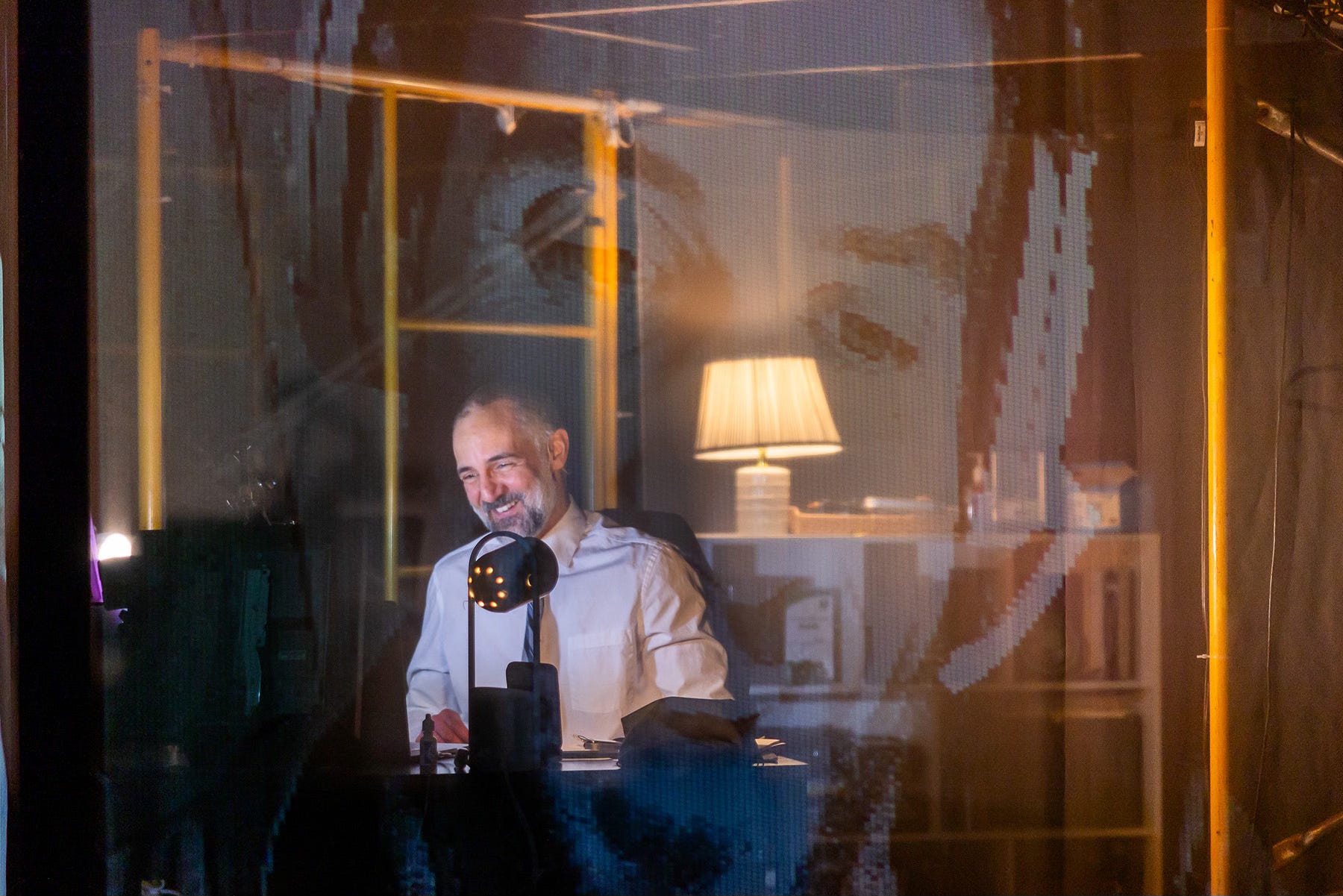
What gives the play its grip is how quickly the work gets under Frank’s skin. Frank has no mechanism for detaching from it; he treats each decision as a moral encounter rather than just part of the job, and it begins to consume him. Nacer tracks that shift with remarkable control, letting the character’s composure fray by degrees rather than collapse outright. As time goes on, the isolation, the unraveling of his home life, and the steady exposure to material he cannot unsee pull at something he has tried to keep buried, sharpening his fixation on the boy into something far more consuming and, potentially, dangerous.
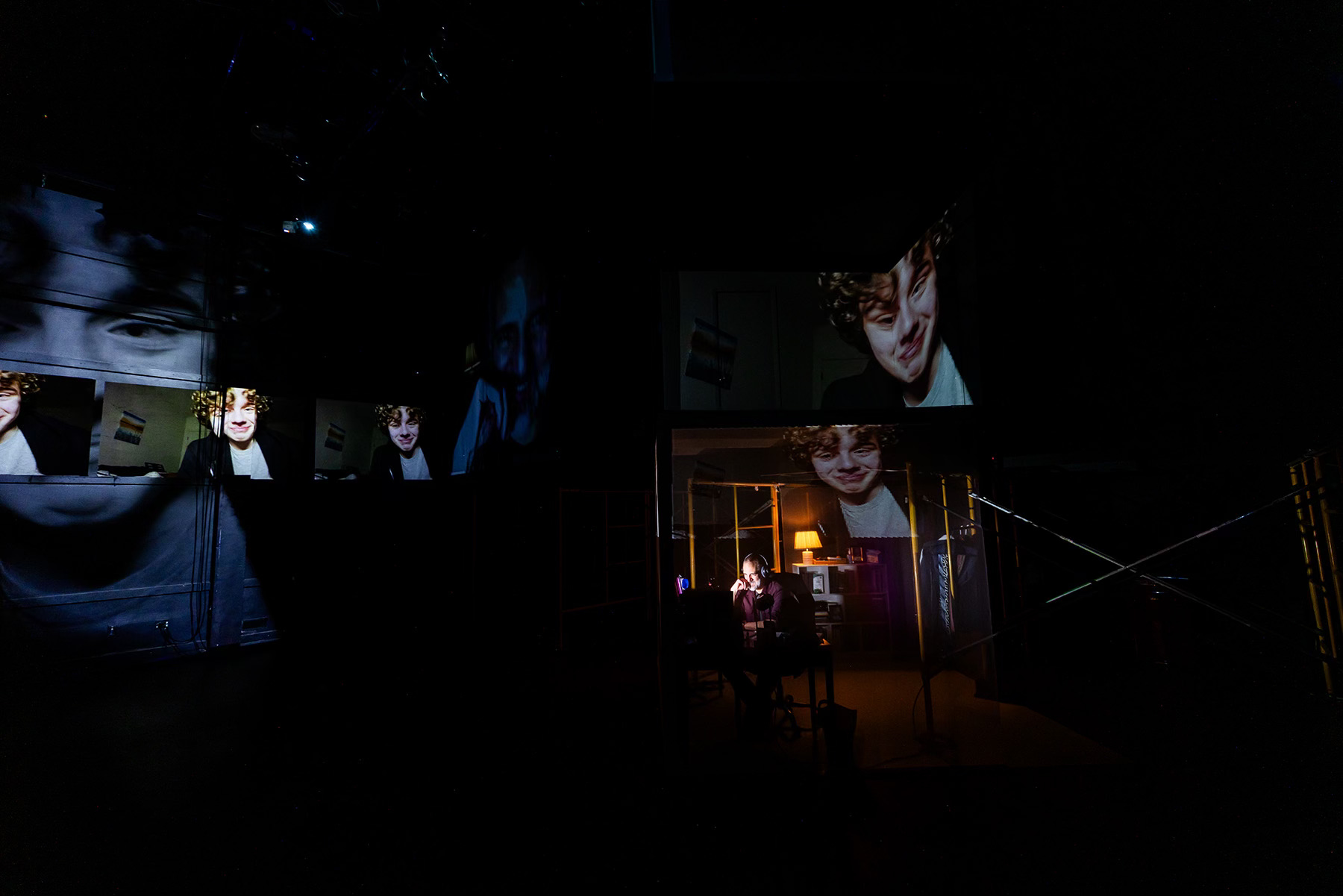
Jules Talbot, as his coworker Rayne, supplies much of the evening’s humor, her live video close-ups revealing just how well she’d translate to film acting; as Martin, Greg Maraio is excellent here, entirely believable as a supervisor keeping things moving while still deeply unsettled by the work. And the always stellar Celeste Oliva, as Frank’s wife Edyth, brings a vivid, gritty exhaustion to her few but pivotal scenes.
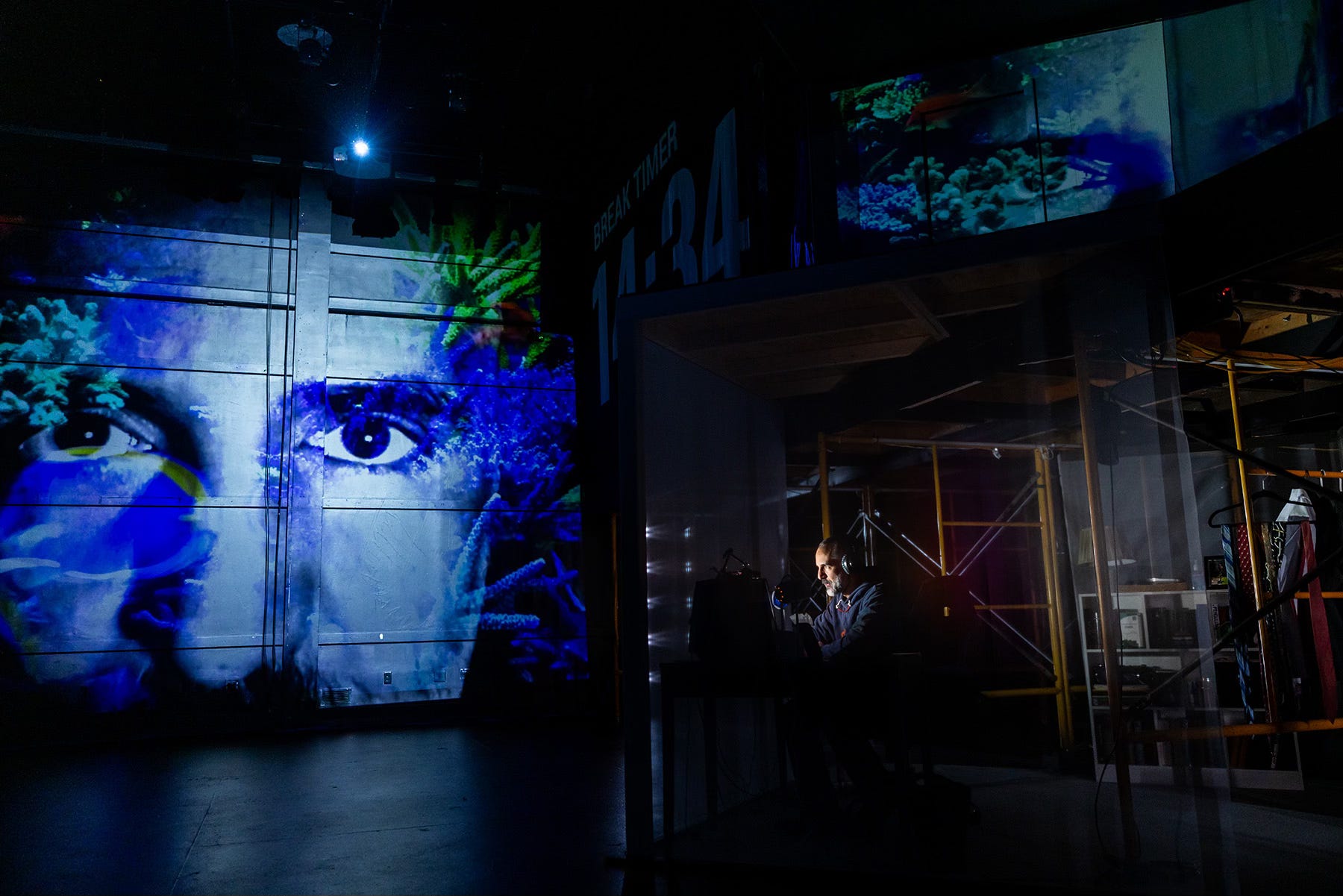
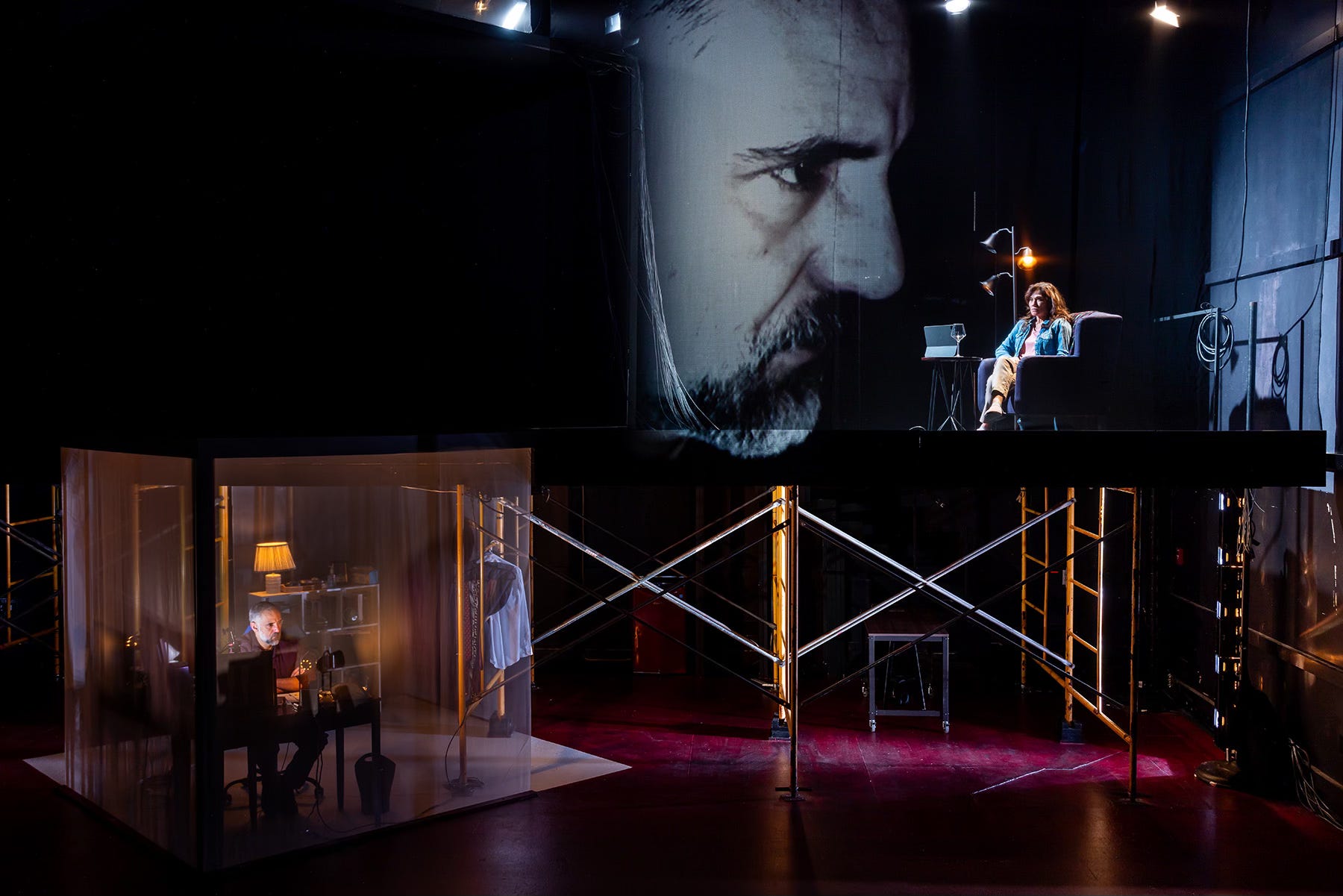
It’s not just the acting. Under the direction of Jared Mezzocchi, who also serves as multimedia designer, the play is realized with uncanny precision and clarity. The staging is razor-sharp, constantly activating every corner of the space, combining onstage actors with ingenious video design. It’s an unusually cohesive theatrical language: Sibyl Wickerseimer’s set, Kevin Fulton’s lighting, and Christian Frederickson’s sound all work in tandem to build a crisp, legible, and endlessly compelling world.
The Moderate is relentlessly watchable, and Urban builds the play’s pressure with real focus. But what that experience ultimately adds up to is less clear. The job damages him — unmistakably — but it also draws him into a reckoning with his past that becomes the play’s climax. That arc carries a certain dramatic logic, but it introduces a tension the play doesn’t quite resolve: the same work that destabilizes him is also what, paradoxically, clarifies him.
The play works best in its build — the mounting sense that something is going wrong, and that Frank may already be in too deep. It unfolds like a thriller, with real stakes and genuine unease. But when that same machinery begins to drive his personal breakthrough, the logic starts to feel a little too convenient — and ultimately, a bit pat.
And that leaves the play in a difficult position. As the play ends, it is as if a spell has been lifted. The pressure that has defined the evening recedes, and Frank — now returning to the job in person — seems, strikingly, at ease with it. What had felt untenable begins, almost at once, to seem livable. The play never fully accounts for how one gives way to the other.
What may be missing is not a clearer answer, but a messier one — one that refuses to let the same experience that breaks Frank also so neatly reassemble him. The ending might carry more weight if that clarity came at a sharper, more visible cost — less a resolution than a shift in what he now must carry — and if the play did not so abruptly trade its sense of danger for something he seems prepared to embrace. There is also a question of scale: if the play is meant to function as a metaphor for the psychic toll of constant exposure to online content and media in general, it is too specific in its rendering of moderation to fully function that way.
Despite this, The Moderate remains a striking achievement in both production and performance — gripping throughout, even as its meaning never quite settles into focus.
The Moderate. Through March 1 at Central Square Theater, Cambridge. www.centralsquaretheater.org. Running time: 90 minutes.