

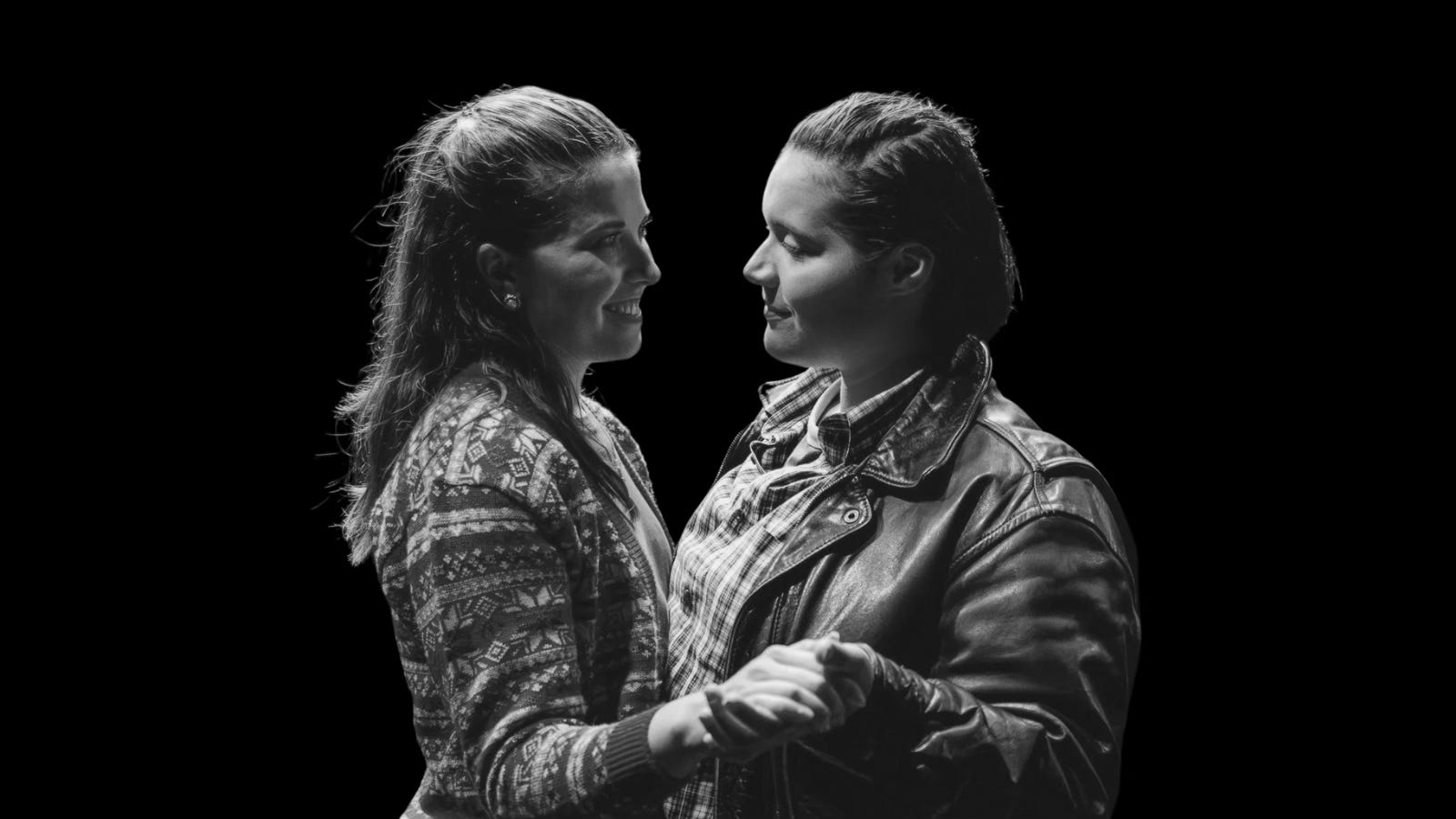
Not all miracles raise the dead or part the seas. They unfold instead in the ordinary moments when a life quietly changes course. One such moment unfolds on a Boston street, in a city on the brink of change. KJ Moran Velz’s altogether remarkable new play, Mother Mary, happens to be one of those little miracles, too.
In the fall of 1968, Boston was thick with unrest. Its Catholic working-class neighborhoods were colliding with the city’s shifting racial and cultural landscape; urban renewal was displacing Black and immigrant residents from the South End, while Irish enclaves like Southie clung fiercely to tradition and the Church’s authority. The divide between the two neighborhoods — Irish South Boston and the increasingly Puerto Rican South End — was as much cultural as it was geographic, a boundary rarely crossed except out of necessity. At the same time, Boston police were cracking down — often violently — on the city’s semi-secret queer spaces. Stonewall was still a year away; busing, six. Against that backdrop of faith, class, and cultural tension, Mother Mary unfolds as a kind of reverse Nativity — a story of two women seeking their own salvation in a city still ruled by men, priests, and power.
The story begins, fittingly, outside St. Brigid’s in South Boston, where a chance encounter leads to a connection neither expects. Jo, a 32-year-old butch Puerto Rican cab driver, is all swagger and sarcasm at first, but there’s a gentleness that seeps through her armor. Mary, a 29-year-old Catholic schoolteacher, carries her own contradictions: devout and demure, yet restless beneath the weight of her own piety and the rapidly changing world around her. Both are first-generation daughters, each still tethered in different ways to the worlds their mothers left behind.
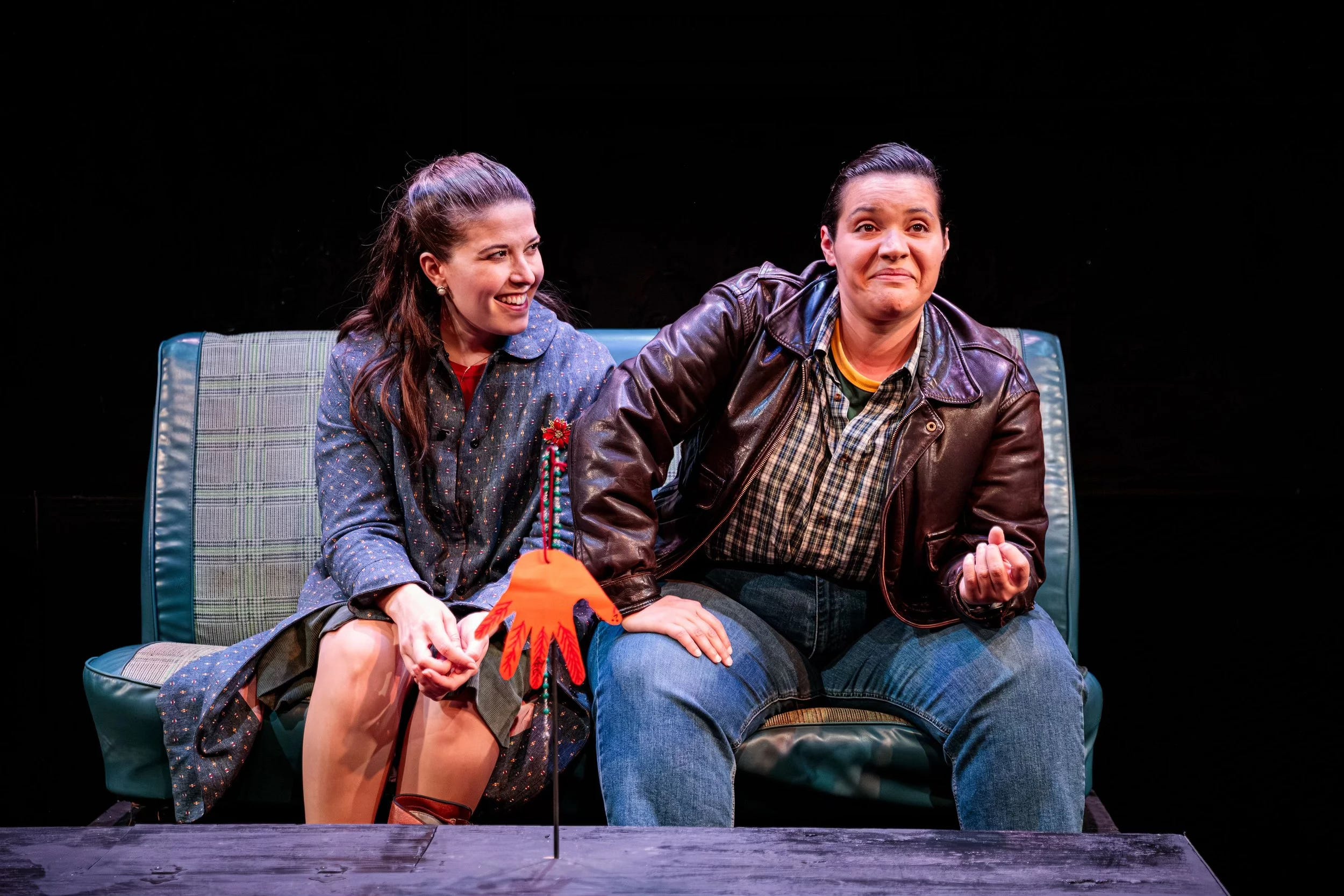
Velz’s dialogue has both muscle and music, and their exchanges about faith, art, and literature are as tender as they are electric. When Mary invites Jo to see The Velvet Underground at the Boston Tea Party, it becomes a small revolution of its own: a Catholic girl ushering a queer woman into the counterculture’s cathedral of noise. She may be good, but she’s hardly innocent. Despite Mary’s steady boyfriend, the women continue to bond over feminist and queer literature, including the poetry of Julia de Burgos, whose words bridge the distance between their worlds. They soon discover the mirror between Puerto Rico and Ireland — two islands bound by Catholicism and colonial rule, each marked by exile, assimilation, and the slow erosion of language. The play treats those parallels not as metaphor, but as inheritance.
On a late-night Christmas drive to Rochester — an anti-Bethlehem of sorts — the two embark on a pilgrimage that tests the boundaries of faith, freedom, and the body’s right to its own salvation. It sanctifies queer love and women’s mutual care as acts of grace, finding the sacred in the tender courage of two women rewriting what salvation means. To say more would spoil its hard-won grace.
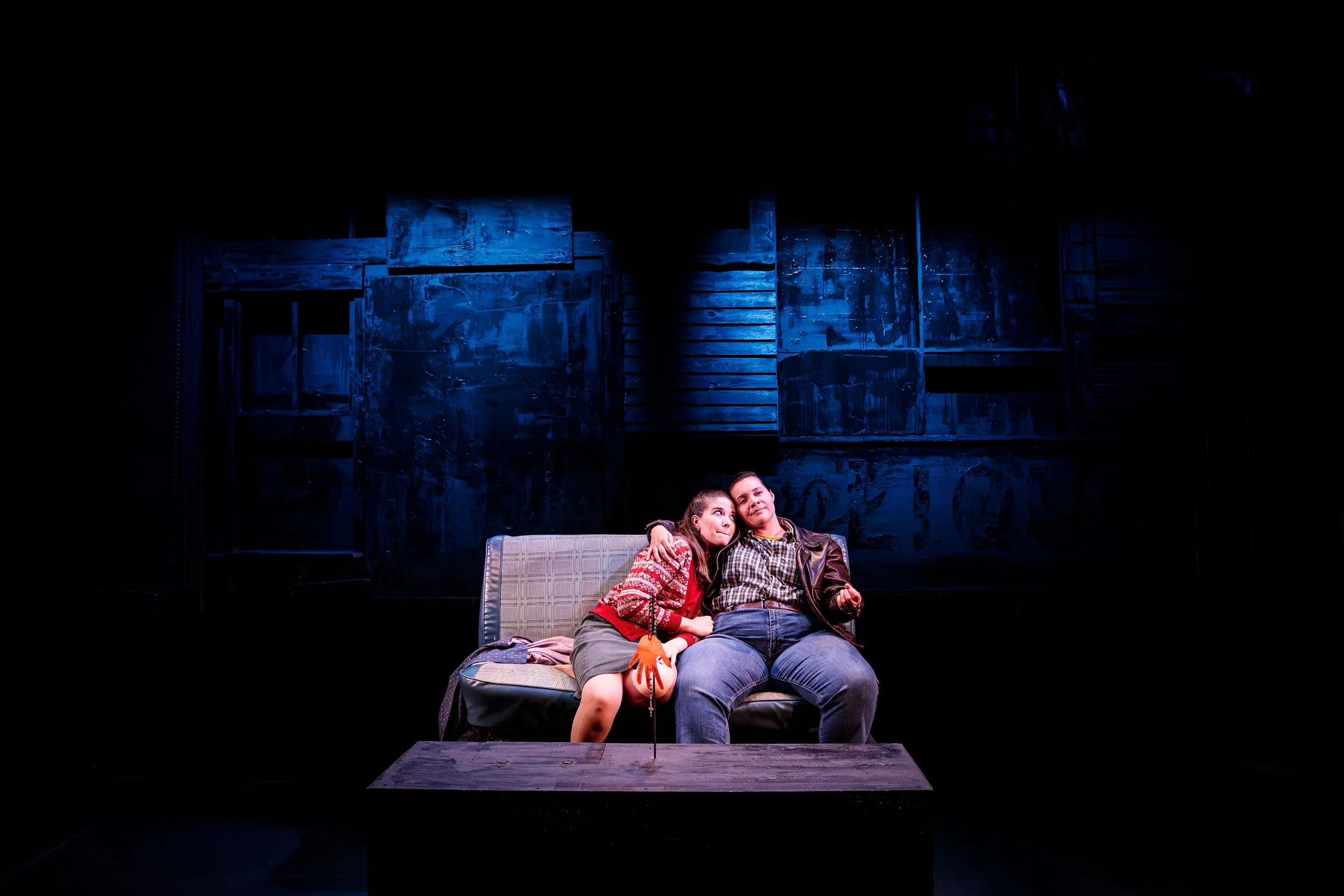
Much of Mother Mary takes place in Jo’s cab — a vinyl bench that serves as confessional, bedroom, and sanctuary all at once. Cristina Todesco’s design renders it as a lonely island of color against an inky backdrop of blackened clapboards and forgotten storefronts, Boston both looming and vanishing. All design elements coexist in perfect harmony: Darius Knight Evans’s lighting bathes the pair in hues that suggest both neon temptation and midnight prayer; Nora Kempner’s costumes are just right; and Mackenzie Adamick’s sound design adds an almost cinematic pulse to the story.
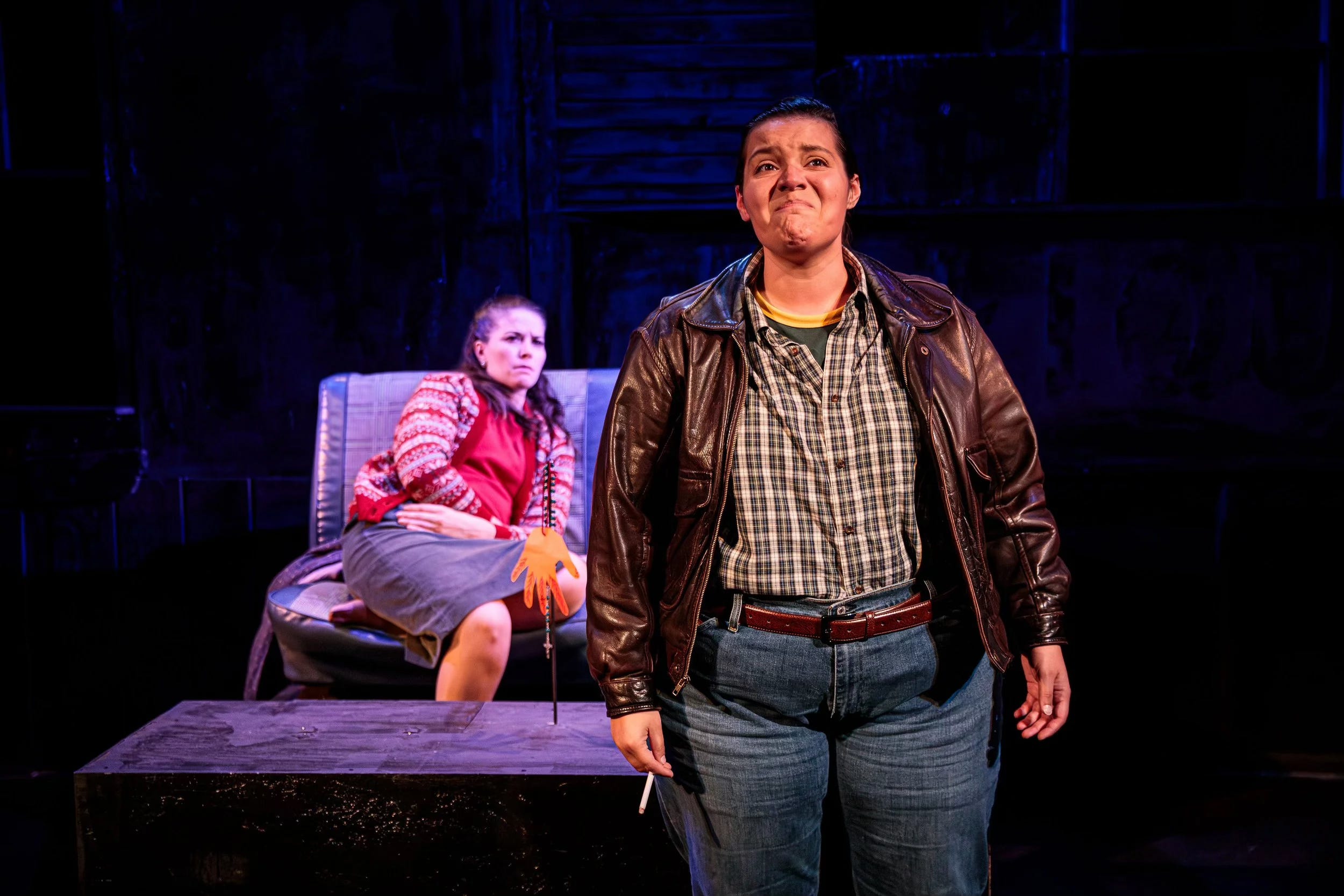
As Jo, Adriana Alvarez deftly captures a young woman suspended between multiple worlds: masculine-coded yet defiantly female, Catholic by upbringing but spiritually unmoored. Her performance radiates that tricky blend of bravado and fear — she’s the protector, tough because the world taught her to be, but every move she makes is powered by care.
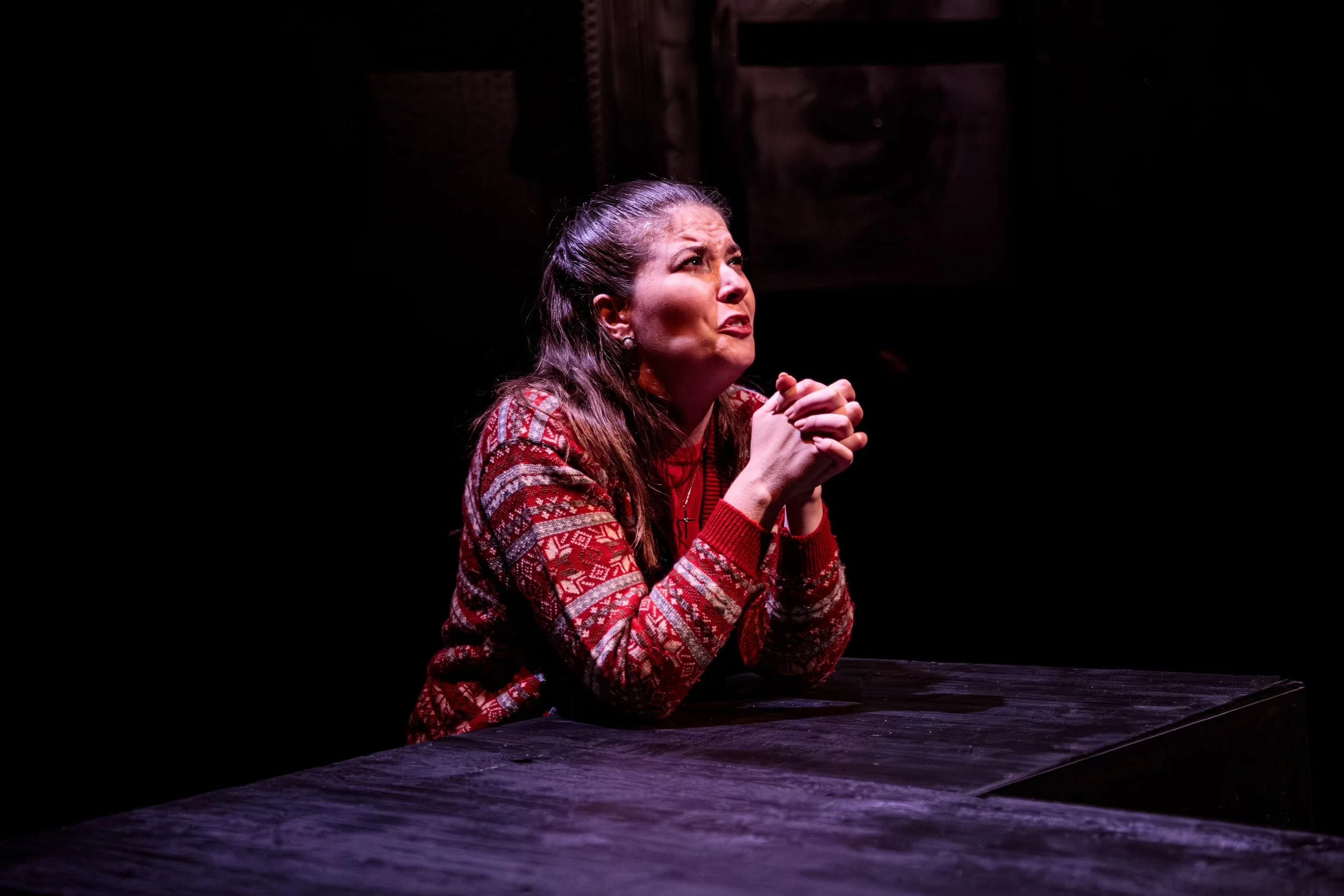
As Mary, Tara Forseth delivers one of the year’s most quietly astonishing turns. She moves with a prim self-containment that cracks open slowly, revealing a kind of interior rebellion. Her Mary is at once devout and disobedient, a woman torn between guilt and grace, obedience and awakening. There’s a flicker of mischief in her eyes — that familiar glint of the Catholic girl who wants to be good but wonders what else is out there.
Elaine Vaan Hogue’s lucid direction keeps the production taut through its rapid tonal shifts — from erotic to theological, romantic to political — without ever losing intimacy. Her brilliant work on Actors’ Shakespeare Project’s 2023 revival of How I Learned to Drive was equally precise; here, she brings that same unflinching candor to female desire and moral clarity.
If Mother Mary falters anywhere, it’s in pacing: the opening could breathe longer before the story hits the gas, and a few transitional beats feel rushed, as if the play is eager to reach its more overtly dramatic turns. But that’s a common hazard of world premieres, and no reflection on the integrity of Velz’s writing, which is both conceptually daring and emotionally grounded.
Through Jo and Mary, Velz reminds us that female and queer love, agency, and solidarity are themselves sacred acts — an embodied theology that remakes salvation in human form. Grace doesn’t descend from heaven; it’s made — daily, imperfectly, and defiantly — by those who recognize it in each other.
In the end, Mother Mary isn’t about faith lost or found; it’s about faith remade in the image of two women who, by choosing each other, make the divine visible again. How’s that for a miracle?
Mother Mary
Through October 26 at Boston Playwrights’ Theatre, Boston; boastonplaywrights.org. Running time: 100 minutes.
One of the best new plays from Boston in recent years! I can’t agree with your review more, very well done!