

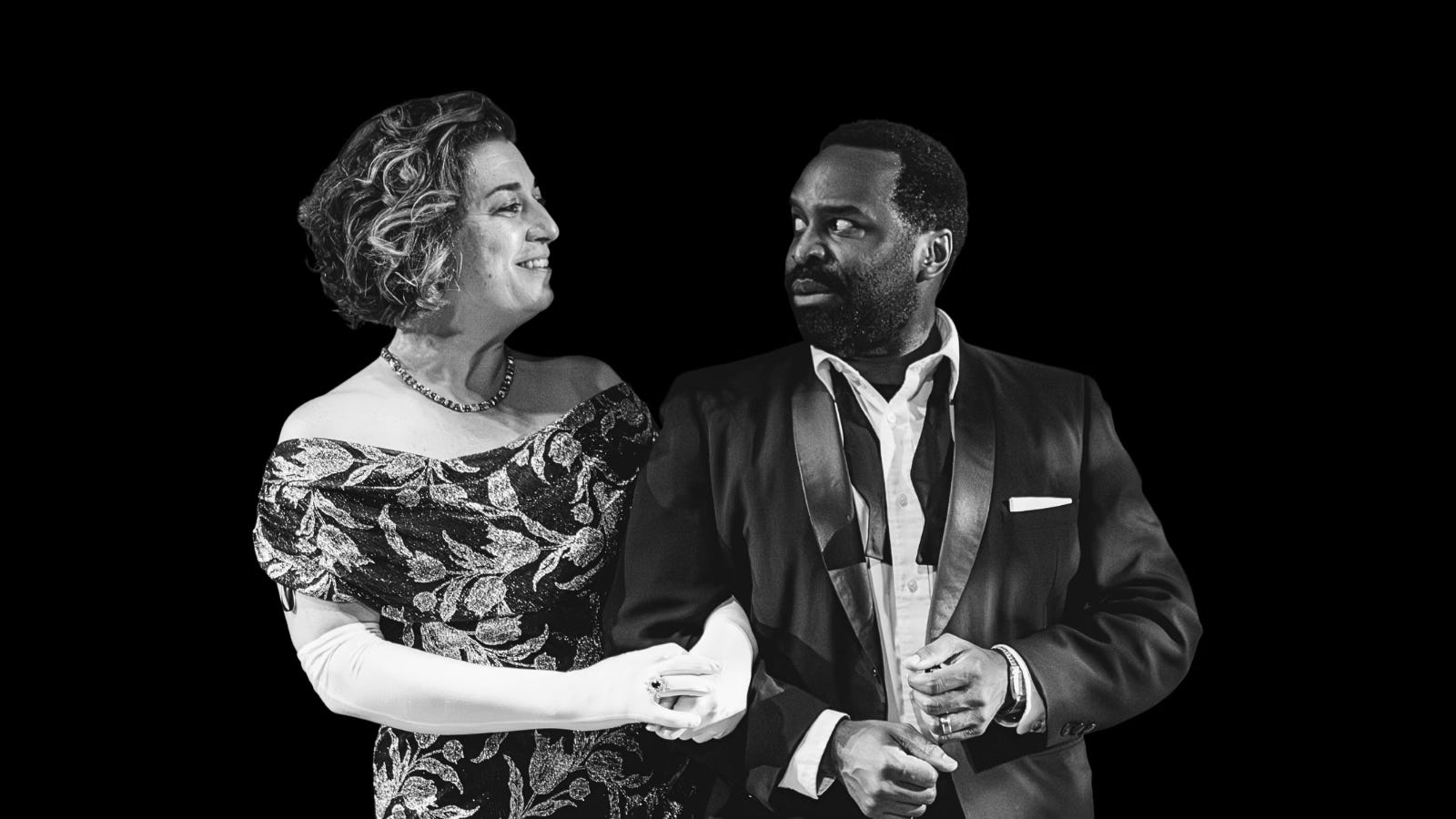
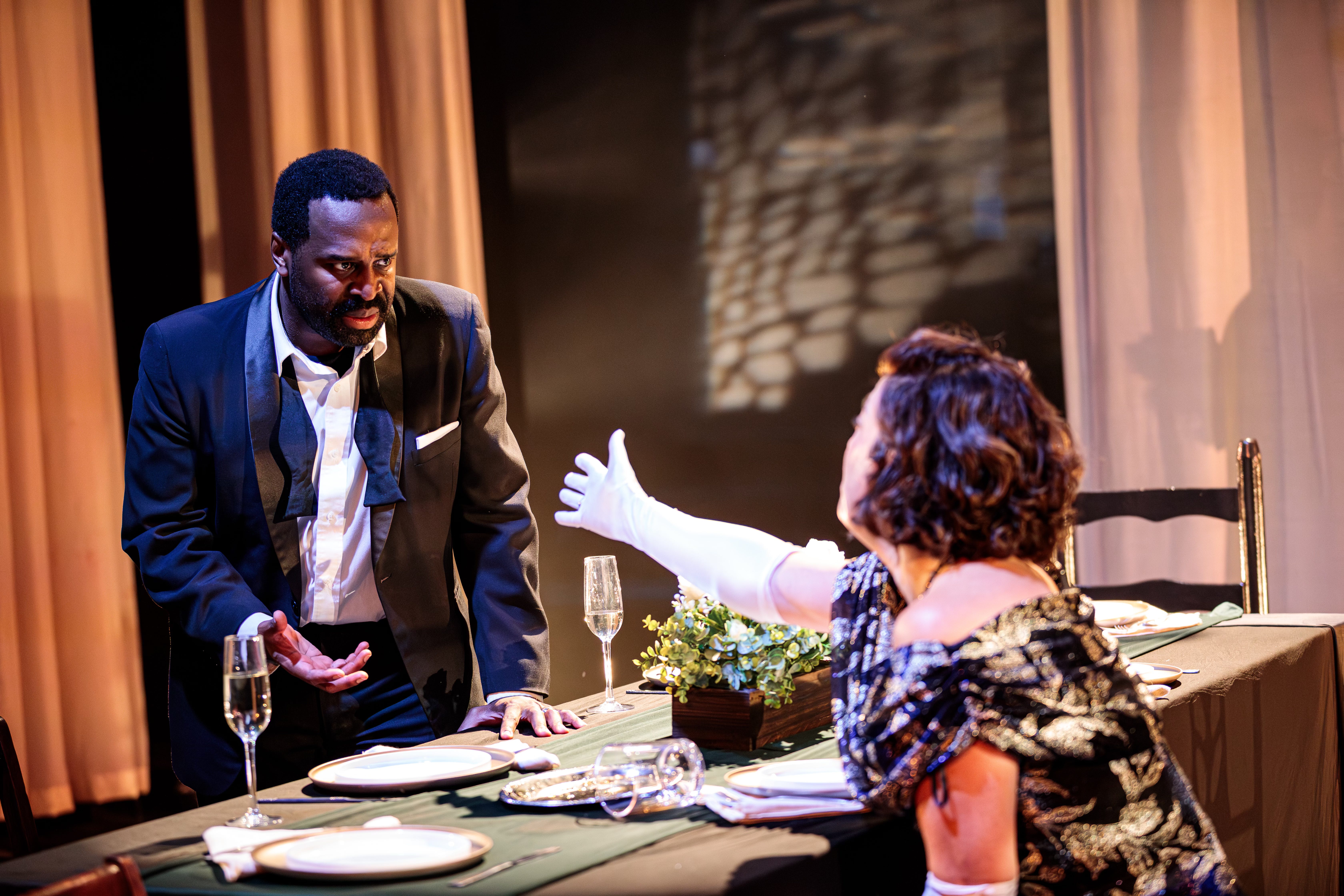
Brooke Hardman and Omar Robinson. Photo by Benjamin Rose Photography.
Every age invents its own witches.
In Shakespeare’s Macbeth, his witches never forced the hand, they only planted the thought, and what followed was self-destruction disguised as destiny. In Actors’ Shakespeare Project’s new Macbeth, the mind becomes the battlefield: the witches—now scientists in lab coats—don’t conjure demons; they administer doses. What was once supernatural temptation becomes behavioral design.
That’s the organizing principle of Christopher V. Edwards’s Macbeth (or MK-Beth), a tragedy reimagined as an experiment, with Shakespeare’s instruments of fate recast as the scientists who manipulate it. Directed with startling imagination, the production draws from MK-Ultra, the real CIA program that tested drugs and psychological manipulation on unwitting subjects. The conceit won’t please everyone, but it lands with a chill that lingers.
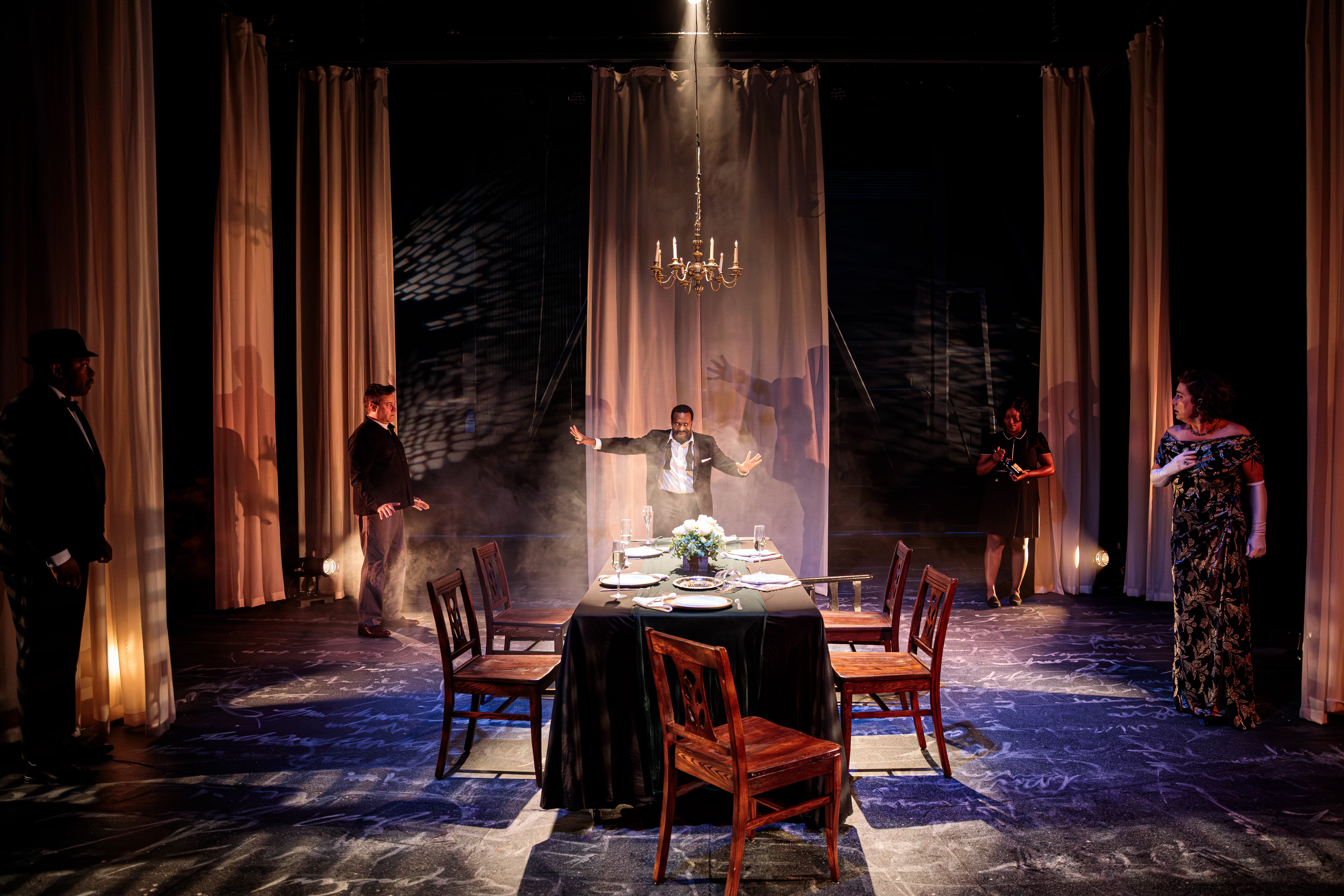
The familiar plot mostly remains, but the frame has shifted. In a covert 1960s laboratory, Macbeth and his wife become subjects in a government mind-control experiment. The witches feed Macbeth visions of glory through drugs, static, and suggestion. State power replaces divine fate, and hallucination and paranoia read as chemical fallout. Turning the witches into scientists eliminates the mythic grandeur, but the trade-off works: what’s lost in mystery is gained in menace. Edwards’s direction—a master class in clarity and storytelling—makes it legible without oversimplifying.
Taken literally as a Cold War story, the conceit sometimes strains. Where it soars is in the way it connects to our present. The witches no longer stir a cauldron, but they dose and observe; their methods, both chemical and psychological, feel disturbingly familiar.
It’s the same circuitry that powers our feeds, steady doses of news, propaganda, fake news, and click bait. In the play, the mind control is government sanctioned. For us, presently at our own political tipping point, government mandates don’t feel like a stretch at all. Macbeth reads that condition with eerie precision: the Cold War setting is just a mirror.
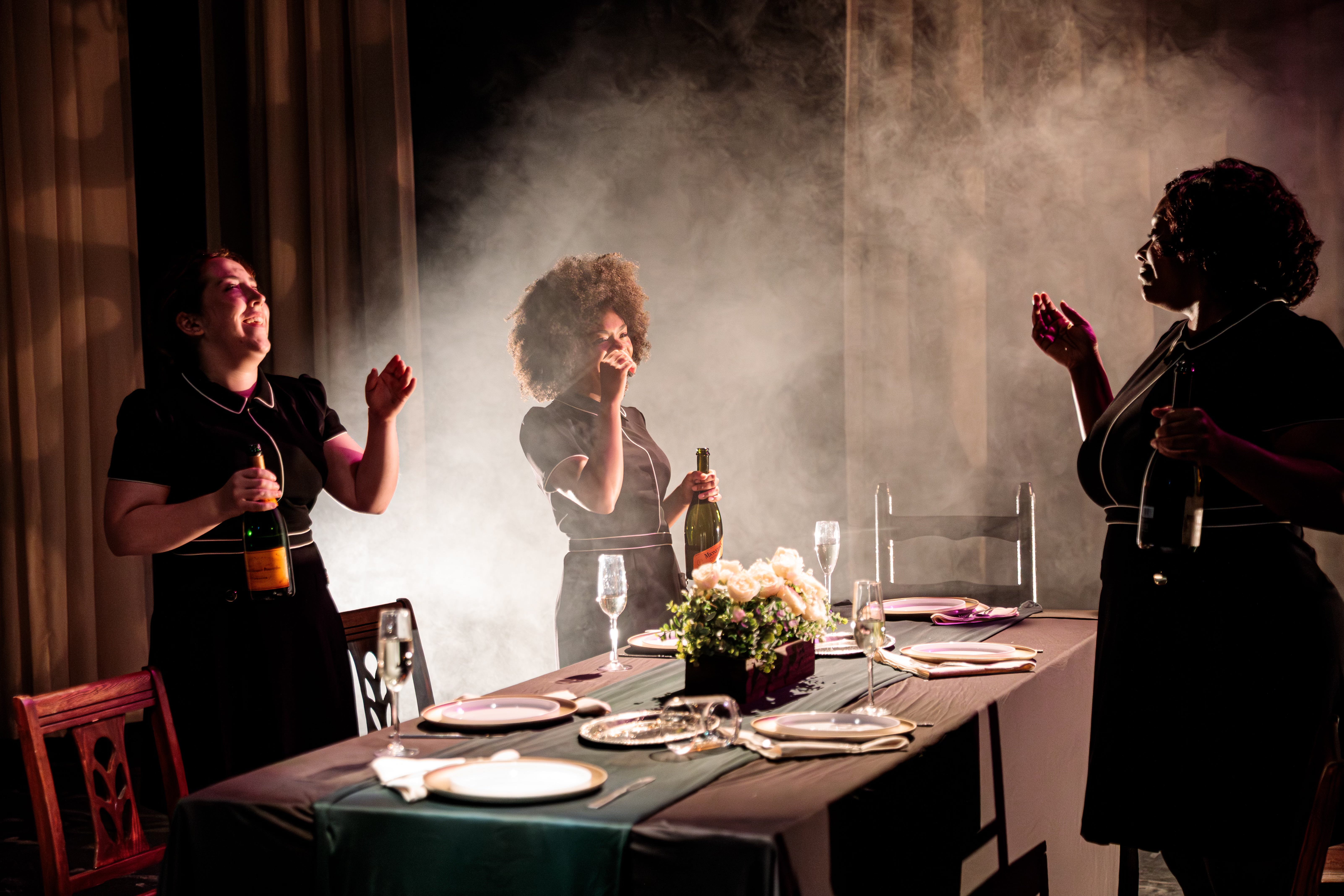
Dennis Trainor Jr.’s Porter becomes the hinge between those two realities, stumbling out like the internet incarnate—funny, frantic, and fluent in nonsense. His rewritten monologue, a word salad of trending despair, turns Shakespeare’s gatekeeper into a gatecrasher from 2025: part news feed, part breakdown.
“The world’s on fire, and no one smells the smoke,” he mutters before launching into a daffy torrent of headlines—from Trumpworld and Epstein to Palestine—ending with his usual plea: “I pray to you, remember the Porter.” Trainor’s tirade is more than comic interruption. His fury connects the mind control onstage to our nightmarish present, thereby allowing this high-concept Macbeth to really stick the landing. But Trainor needs to more clearly distinguish his Porter from his Duncan, a role he played just moments earlier. The sequence would be more profound if, say, the Porter were played as a wise Shakespearean fool.
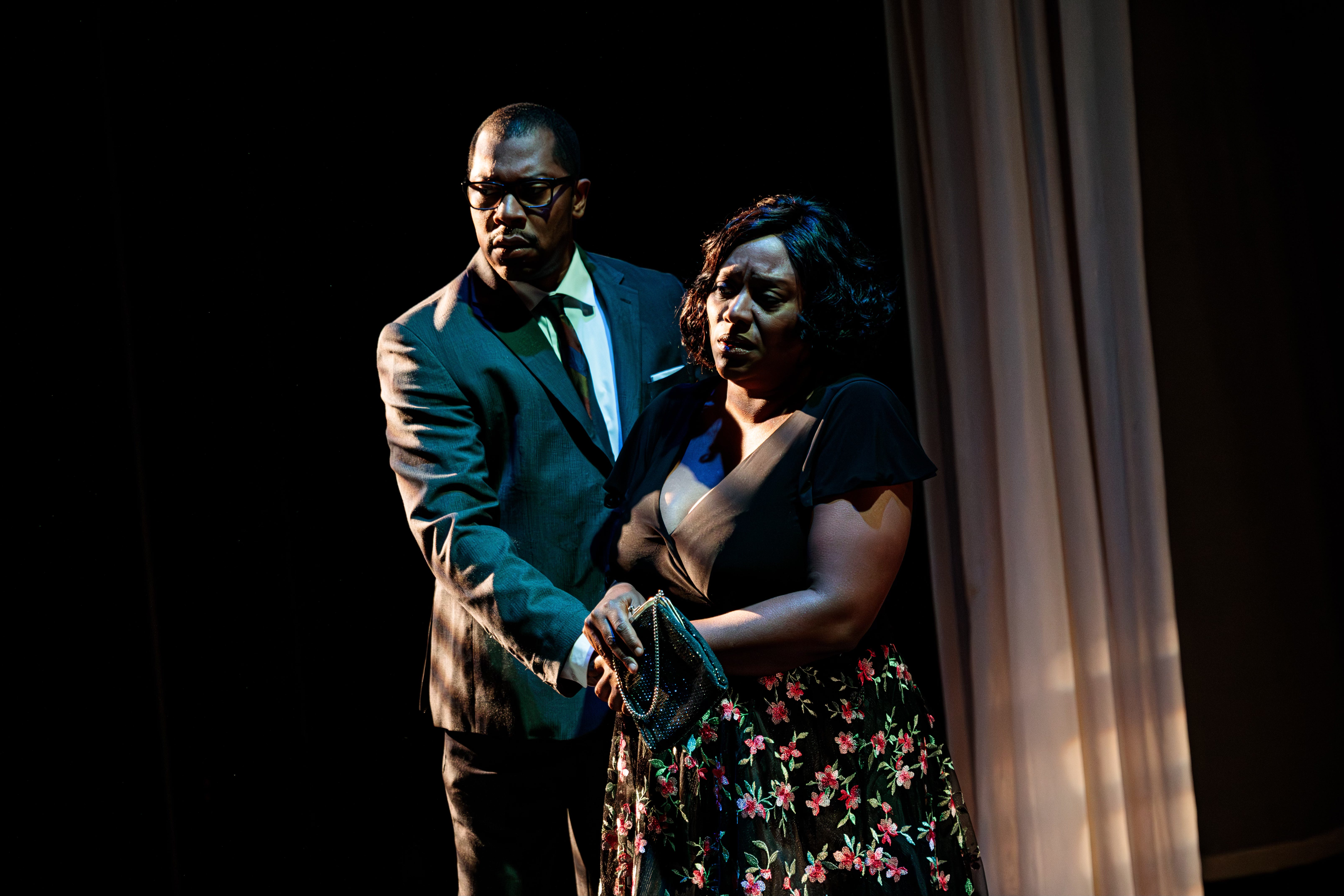
The rest of the cast could hardly be better. Omar Robinson’s Macbeth doesn’t blaze with ambition so much as flicker with static, tragic not for his greed but for his sincerity. It’s a towering performance that seems to occupy multiple dimensions at once, slipping beautifully between patient and predator, while remaining resolutely human. Brooke Hardman’s Lady Macbeth is similarly convincing, always poised between dominance and collapse. There’s also outstanding featured work from Boston stalwarts Jade Guerra, Jesse Hinson, Jennie Israel, and Chingwe Padraig Sullivan.
Edwards ensures that the production hums palpably with fear and paranoia, its atmosphere thick and electric thanks to an exceptional design team. Elmer Martinez’s lighting slices across the stage in surgical shafts, bleaching faces one moment and obscuring them the next, and Danielle Ibrahim’s spare but evocative set fuses laboratory, castles, and even the Scottish coast flawlessly (Sue Rees’s perfect projections help). Sound designer Mackenzie Adamick completes the atmosphere with an intense, meticulously detailed soundscape that stuns.
In Macbeth’s world of conditioning, Macduff (an assured Brian Demar Jones) stands apart as what is perhaps the last unprogrammed mind. When he topples Macbeth, it reads as a return of truth and normalcy. Still, although the experiment may be metaphor, its casualties are flesh and blood, and the human loss of Macbeth still registers.
The final scene adds a line Shakespeare never wrote: “Tyranny is dead. All troubles are gone.” It sounds like deliverance, but the witches are already circling—suggesting that tyranny doesn’t die; it just migrates.
Every age invents its own witches. Ours are already hard at work.
Macbeth
Through October 26 at Actors’ Shakespeare Project, Watertown; actorsshakespeareproject.org. Running time: 2 hours 25 minutes.
Wow, this sounds like a timely and poignant twist on a classic tale